
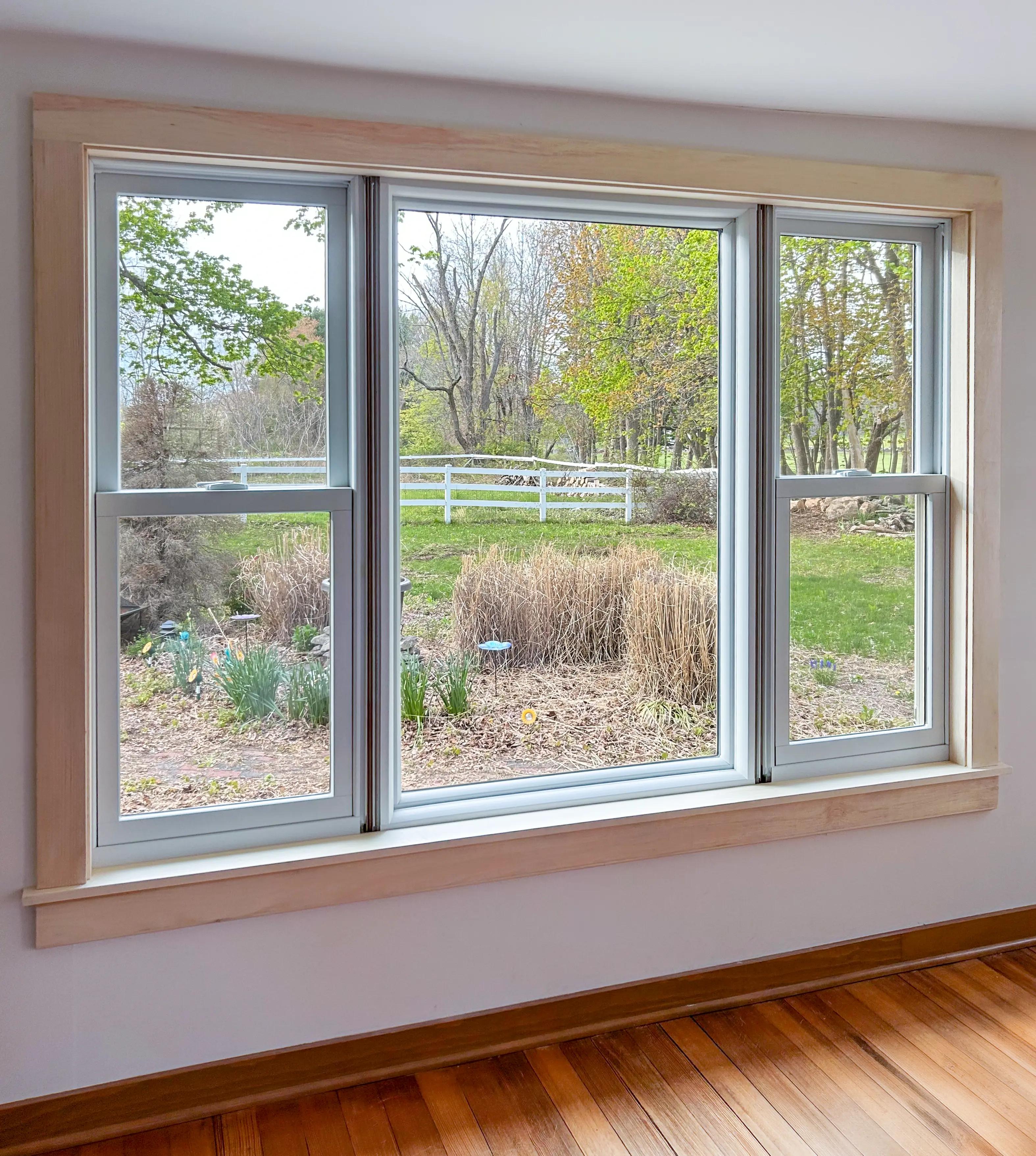
When choosing replacement windows, frame material plays an important role in how your windows look, perform, and hold up over time. Two options worth comparing are Fibrex® composite material and traditional wood.
Wood windows are known for their natural appearance, strength, and customization options. Fibrex combines reclaimed wood fiber with thermoplastic polymer to provide durability and insulation with less maintenance.
Both materials have advantages, but the right choice depends on your budget, design preferences, and expectations for long-term upkeep. Here's how Fibrex and wood windows compare.
What's the Difference Between Fibrex and Wood Windows?
The primary difference between Fibrex and wood windows is how the materials are constructed and maintained.
Wood windows use natural timber for their frames, providing a traditional appearance that can be painted or stained. Many modern wood windows also include protective exterior cladding made from aluminum, vinyl, or other materials to help reduce weather exposure.
Fibrex is a proprietary composite material developed by Andersen Corporation and used in Renewal by Andersen replacement windows. It combines reclaimed wood fiber with thermoplastic polymer, creating a material designed to resist moisture, warping, and deterioration without requiring regular painting or staining.
The key distinctions include:
- Appearance: Wood offers authentic grain and a wider range of natural finishes, while Fibrex provides several factory-applied colors and finishes.
- Maintenance: Wood generally requires more upkeep, although protective cladding can reduce exterior maintenance. Fibrex is designed for minimal routine maintenance.
- Durability: Both materials are strong, but Fibrex is engineered to resist moisture-related deterioration and maintain stability during temperature changes.
- Cost: Both are generally considered premium window materials, with pricing dependent on the product, customization, and installation requirements.
Understanding these differences can help you determine which characteristics matter most for your home.
Fibrex vs. Wood Window Durability
Durability is an important consideration when investing in replacement windows, particularly in areas with changing seasonal conditions.
How Durable Are Wood Windows?
Wood is naturally strong and has been used in window construction for generations. Well-manufactured, properly maintained wood windows can provide reliable performance for many years.
However, wood responds to changes in moisture and temperature. Without adequate protection, prolonged moisture exposure can contribute to swelling, warping, or rot.
How Durable Are Fibrex Windows?
Fibrex material is engineered to combine the strength of wood with the weather-resistant characteristics of synthetic materials.
The wood fibers are surrounded by polymer during manufacturing, helping protect the material against moisture and decay. Fibrex also resists warping and cracking during changing weather conditions.
Unlike traditional wood, Fibrex does not require periodic painting or staining to maintain its protective finish.
For homeowners in Iowa and Illinois, where windows face freezing winters, summer humidity, and significant temperature changes, these durability characteristics can be particularly valuable.
Maintenance: Which Material Requires Less Upkeep?
One of the clearest differences between Fibrex and traditional wood windows is the amount of maintenance required.
Wood windows need ongoing care to protect their appearance and structural integrity. Depending on the finish and exposure to weather, maintenance may include inspecting for moisture damage, repairing worn finishes, and repainting or staining when necessary.
Fibrex windows are designed to be low maintenance. Their factory-applied finishes do not require regular repainting or staining, and routine cleaning is typically sufficient to maintain their appearance.
For homeowners who prefer to spend less time maintaining their windows, Fibrex offers a practical advantage over traditional exposed wood.
Are Fibrex or Wood Windows More Energy Efficient?
Both Fibrex and wood have insulating properties that can contribute to energy-efficient window construction.
Wood is a natural insulator and helps limit heat transfer through the frame. Fibrex also provides insulating benefits and is designed to maintain dimensional stability during seasonal temperature changes.
However, frame material alone does not determine a window's overall energy efficiency.
Glass construction, Low-E coatings, insulating gas fills, weatherstripping, and installation all influence how effectively a window limits heat loss and gain.
When comparing products, look at their National Fenestration Rating Council (NFRC) labels, particularly the U-factor, which measures heat transfer through the complete window. Lower U-factors indicate better insulation.
Fibrex vs. Wood Windows: Appearance and Design Options
Natural wood provides authentic grain patterns and can be stained or painted to complement a home's interior. This flexibility makes wood particularly appealing for historic properties, traditional architecture, or homeowners who want to preserve existing woodwork.
Fibrex offers a different approach. Renewal by Andersen provides multiple color and finish options designed to complement a variety of architectural styles.
Because Fibrex is structurally strong, it also allows for narrower frame profiles, creating more visible glass area and allowing additional natural light into the home.
However, Fibrex does not offer the same natural wood grain or unrestricted staining flexibility as traditional wood.
For homeowners who prioritize authentic wood finishes, traditional or clad-wood windows may be the better fit. Those who prefer consistent finishes with less ongoing maintenance may find Fibrex more appealing.
How Do Fibrex and Wood Window Costs Compare?
Both Fibrex and wood windows typically involve a higher upfront investment than basic vinyl windows, although pricing varies considerably.
Wood window costs depend on the wood species, window style, finish, exterior cladding, and level of customization. Specialty wood windows and custom architectural designs may carry higher prices.
Fibrex windows are exclusively available through Renewal by Andersen's replacement window program, which includes custom manufacturing and professional installation. Pricing depends on window dimensions, style, glass selections, and project requirements.
When comparing estimates, consider more than the initial purchase price. Wood windows may involve future painting, staining, or finish repairs, while Fibrex is designed to minimize those maintenance requirements.
The better long-term value depends on the specific products, expected upkeep, warranty coverage, and how long you plan to remain in your home.
Which Is Better for Your Home: Fibrex or Wood Windows?
Neither material is necessarily the best choice for every homeowner. Both can provide attractive, durable, and energy-efficient replacement windows when properly manufactured and installed.
Wood windows may be a better fit if you:
- Prefer authentic wood grain and natural finishes.
- Want the flexibility to stain or refinish your windows.
- Are comfortable with the maintenance requirements of your chosen product.
Fibrex windows may be a better fit if you:
- Want durable windows with minimal routine maintenance.
- Prefer not to repaint or stain window frames regularly.
- Are looking for a material engineered to resist moisture and temperature-related wear.
- Want a coordinated replacement process with custom manufacturing and professional installation.
The most important consideration is finding a window system that balances appearance, performance, maintenance, and cost based on your home's needs.
Explore Fibrex® Replacement Windows With Renewal by Andersen
For homeowners interested in the strength and insulating benefits of wood without its traditional maintenance requirements, Fibrex composite material offers an alternative worth considering.
Renewal by Andersen replacement windows are custom-built using exclusive Fibrex material, designed to resist warping, rot, and weather-related deterioration. Their durable construction helps windows maintain their appearance and performance through changing seasons.
Paired with High-Performance™ Low-E4® glass options, Renewal by Andersen windows are designed to help reduce heat transfer and improve year-round comfort, an important consideration for homes throughout Central Illinois, the Quad Cities, and Des Moines.
Renewal by Andersen also provides a full-service replacement experience, from the initial consultation and measurements through custom manufacturing and installation by Certified Master Installers.
Schedule a free in-home consultation with Renewal by Andersen to explore Fibrex replacement windows, review available styles and finishes, and find a solution that fits your home's needs.
Schedule a Consultation