
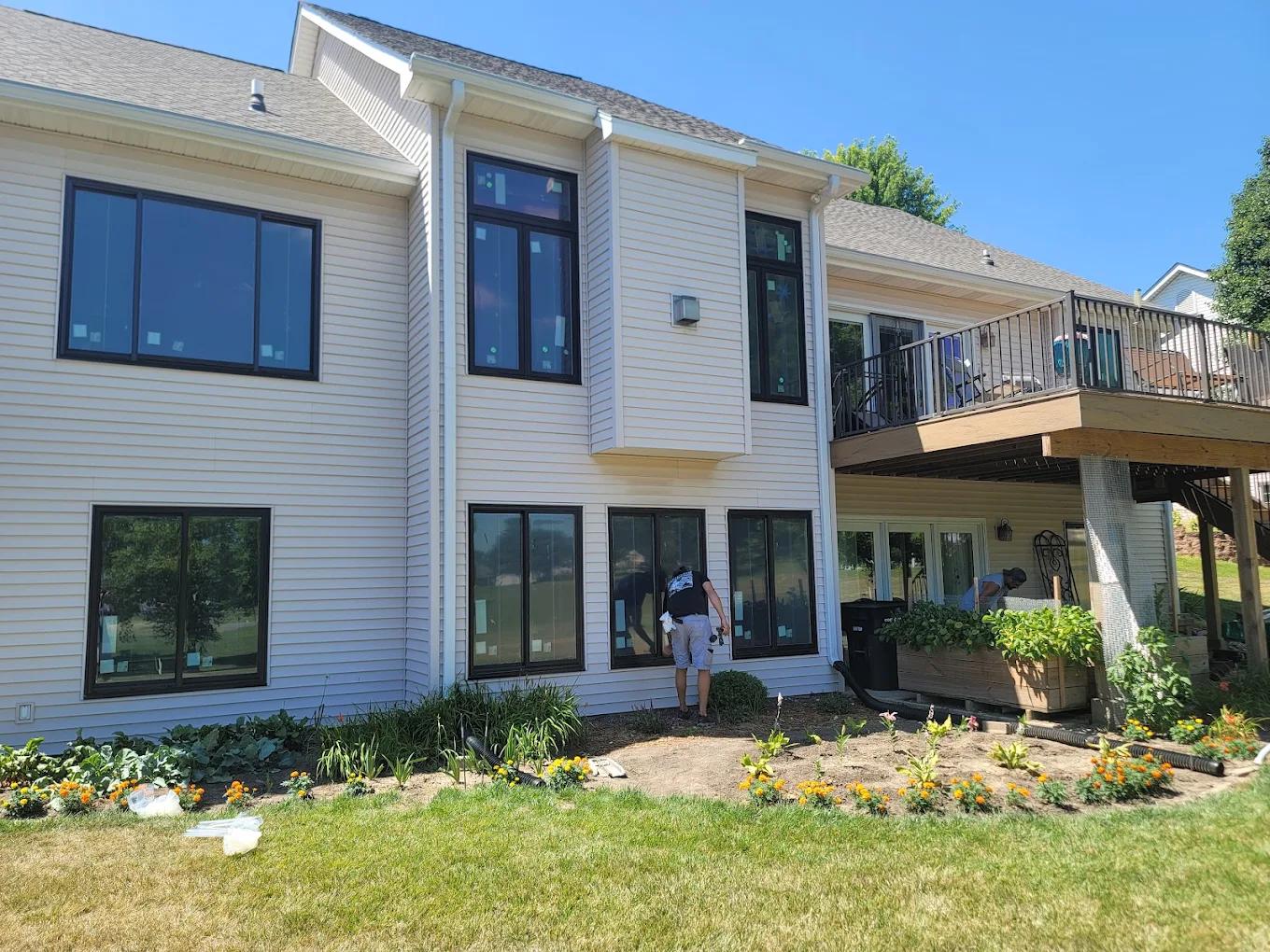
If you are considering replacing every window in your home, cost is likely one of your first questions. Unfortunately, there is no single whole-house price that applies to every project.
The cost to replace all windows in a house depends on how many windows you have, their size and style, the materials and glass you select, and the complexity of installation. A home with 10 standard openings will have very different costs than one with 25 windows, oversized openings, or specialty shapes.
Understanding how those factors affect the final price can help you build a realistic budget and compare window replacement estimates more confidently.
What Does Window Replacement Cost?
Window replacement can cost anywhere from a few hundred dollars to $2,500 or more per window, depending on the product and project. For general context, industry pricing places off-the-shelf vinyl windows at roughly $100 to $900 per window, while custom fiberglass or composite windows can range from approximately $300 to $1,500 or more per window installed.
These ranges can provide a useful starting point, but the cost of replacing windows across an entire home is not as simple as multiplying an average price by the number of windows. The size and style of each window, materials, installation requirements, and other project details can all influence the final cost.
What Affects the Cost to Replace All Windows in a House?
For a whole-home project, several variables can make a significant difference in your final estimate:
- Number of windows: More windows mean more products and installation work, although the cost of each opening can vary.
- Window size and style: A standard double-hung window and a large picture, bay, bow, or specialty window do not have the same material or installation requirements.
- Frame material: Vinyl, wood, fiberglass, and composite windows come at different price points and offer different levels of durability, maintenance, and performance.
- Glass options: Energy-efficient glass packages, additional panes, and specialized coatings can affect upfront cost.
- Customization: Custom-sized windows are manufactured for the individual openings in your home and generally cost more than mass-produced, standard-size windows.
- Installation complexity: Accessibility, the condition of existing openings, and the work required to remove and replace old windows can all influence labor costs.
Hardware, grilles, colors, and other design choices can also affect pricing. For that reason, two homes with the same number of windows may still receive very different estimates.
How to Estimate the Cost of a Full-House Window Replacement
If you are in the early stages of budgeting, start by counting the windows you may want to replace. Then look beyond the number itself.
Walk through the house and note which windows are unusually large, have specialty shapes, or may require a different style. It is also worth identifying windows that show signs of water damage or deterioration around the opening.
From there, consider the level of window you are comparing. An inexpensive stock window purchased separately is not directly comparable to a custom window price that includes professional installation and warranty coverage.
When comparing estimates, make sure you know whether the quoted price includes:
- The window itself: Including the selected frame material, glass, hardware, and design options.
- Professional installation: Confirm whether labor is included or quoted separately.
- Removal and disposal: Find out what happens to the existing windows after removal.
- Warranty coverage: Review what is covered for the product, installation, and labor.
- Additional work: Ask how unexpected damage, permits, or other project-specific needs would be handled.
Looking at the complete project cost makes it much easier to compare quotes fairly.
Does Window Style Affect Replacement Cost?
Yes. Window style can have a meaningful impact on the total cost of a whole-house replacement.
Common styles such as double-hung, casement, sliding, and picture windows differ in construction, hardware, and operation. Larger configurations like bay and bow windows require more materials and may involve a more complex installation. Specialty shapes and custom architectural windows can also increase costs.
That means a 15-window project made up mostly of standard openings may cost substantially less than another 15-window project with several large or specialty windows.
Style should not be chosen based on price alone, though. How you want the window to operate, ventilate the room, frame a view, and complement your home’s architecture should also factor into the decision.
Should You Replace Every Window at Once?
Not necessarily. Whether it makes sense to replace all your windows at once depends on their condition, your goals, and your budget.
- Replacing all windows at once: This may make sense when most windows are similar in age or condition, or when you want consistent appearance and performance throughout the home.
- Replacing windows in phases: This can be practical when only certain windows need immediate attention or you prefer to spread the investment over time.
If you choose a phased approach, consider starting with windows causing the biggest problems, such as significant drafts, failed seals, difficult operation, or noticeable comfort issues.
Evaluating the house as a whole before deciding can help you determine which approach better fits your priorities.
Plan for Costs Beyond the Window Itself
A good replacement budget should leave room for project-specific costs that may not be obvious before the existing windows are removed.
Hidden rot, water damage, or structural deterioration around an opening can require additional work. Permit requirements may also vary by location. These costs are not part of every project, but understanding how a contractor handles them can help prevent surprises later.
Look Beyond the Upfront Price
When replacing an entire house of windows, even a modest difference in price per window can add up quickly. That makes it tempting to focus heavily on the lowest estimate.
However, the initial price is only one part of the overall value. When comparing options, consider:
- Durability: How well are the frame and other components designed to perform over time?
- Energy performance: What glass and insulation features are included?
- Maintenance: What ongoing upkeep will the windows require?
- Installation and warranty: What services and protections are included in the quoted price?
A lower-cost option may be the right fit for some homeowners. Others may decide that investing more upfront for custom sizing, durable materials, professional installation, or stronger warranty coverage better aligns with their long-term plans.
Get an Accurate Cost for Your Window Replacement Project
The most reliable way to determine how much it will cost to replace your windows is to have your specific home evaluated.
Renewal by Andersen starts with an in-home consultation where a design consultant can assess your existing windows, discuss which ones you want to replace, and walk through window styles, glass, colors, hardware, and other options. This allows pricing to reflect your actual project rather than a generic per-window estimate.
Renewal by Andersen replacement windows are custom-built for each opening using exclusive Fibrex® composite material, which combines strength, durability, and low-maintenance performance. The full-service process also includes professional installation by Certified Master Installers.
Whether you are replacing a few problem windows or planning a full-house project, understanding exactly what is included in your estimate can help you compare costs and make a more informed investment in your home.
Schedule a Consultation